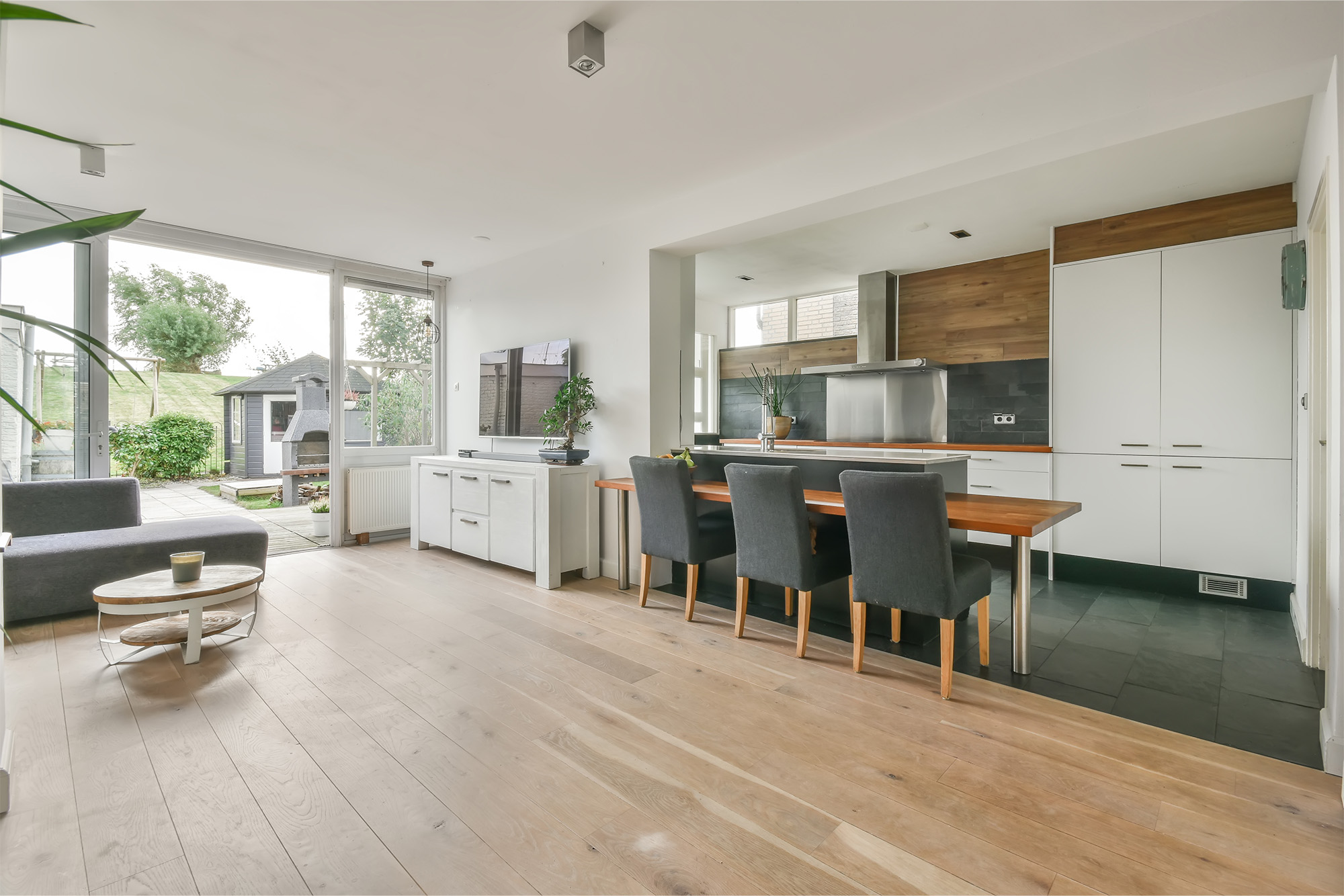
There is something undeniable about the prestige of a wood floor. It is a natural product that brings warmth, character, and a sense of history to a home. However, for residents in the Lone Star State, "wood" isn't a single choice—it’s a fork in the road between solid hardwood and engineered hardwood. Because Texas experiences dramatic humidity swings and has varying soil types that affect home foundations, this choice is more than aesthetic; it’s a structural one. At CW Floors & Lighting, we want to help you understand the "why" behind each option so you can make an informed decision for your property.
Solid Hardwood: The Timeless Original
Solid hardwood is exactly what it sounds like: a single, solid piece of wood from top to bottom. It has been the standard for luxury homes for centuries. The primary advantage of solid wood is its longevity. Because it is solid all the way through, it can be sanded and refinished multiple times. If you decide to change your home’s color palette in ten years, you can simply sand down the wood and apply a new stain.
However, solid hardwood is highly "hygroscopic," meaning it behaves like a sponge. In the humid summers of San Antonio or the Gulf Coast, solid wood planks will absorb moisture and expand. If there isn't enough room, they will "cup" or "buckle." In the dry winter months, they will release moisture and shrink, potentially creating gaps between the boards. For this reason, solid hardwood is generally not recommended for installation directly over concrete slabs (which are common in Texas) or in basements.
Engineered Hardwood: The Modern Texas Solution
Engineered hardwood was designed specifically to solve the stability issues of solid wood. It consists of a top "wear layer" of real hardwood (like Oak, Hickory, or Walnut) bonded over multiple layers of high-quality plywood or a high-density fiberboard core. These layers are stacked in a cross-grain configuration.
This cross-grain construction is the secret to its success. Because the layers pull in opposite directions, the plank remains stable even when the temperature or humidity changes. This makes engineered hardwood the superior choice for Texas homes built on concrete slabs. It provides the exact same look, feel, and "smell" of real wood but with a structural integrity that handles the Texas climate with ease. At CW Floors & Lighting, we often recommend engineered products for our clients who want the luxury of wood without the maintenance headaches of solid planks.
Comparing Life Cycles and Refinishing
The most frequent question we get is, "Can I refinish engineered wood?" The answer depends on the thickness of the "wear layer" (the top layer of real wood). High-quality engineered floors, such as those found at our local showrooms, often have a wear layer thick enough to be sanded and refinished one or two times.
While solid hardwood can be refinished more often (potentially 5–7 times), the reality is that most homeowners only refinish their floors once or twice in their entire lifetime. Therefore, for most people, the stability of engineered wood outweighs the theoretical "infinite" refinishing of solid wood.
Installation Matters: Nailed vs. Glued vs. Floated
The type of wood you choose also dictates how it is installed. Solid wood must be nailed or stapled down to a wood subfloor. This can be an added expense for Texas homeowners who have a concrete slab, as it requires the installation of a plywood subfloor first.
Engineered wood is much more versatile. It can be glued directly to concrete using a moisture-barrier adhesive, or it can be "floated" (where the planks click together and sit on top of an underlayment). Floating installations are excellent for managing the slight shifts that occur in Texas foundations, as the floor can move as one cohesive unit rather than fighting against the house.
Cost and Value Considerations
Initially, solid and high-end engineered hardwoods are comparable in price. Solid wood might have a slightly higher material cost and definitely a higher installation cost if a subfloor is needed. However, both options significantly increase the resale value of your home. Real estate data consistently shows that "genuine wood floors" are one of the top features buyers look for, often providing a 70% to 80% return on investment.
Whether you choose the classic appeal of solid oak or the high-performance stability of engineered hickory, you are making a choice that elevates your home's design. At CW Floors & Lighting, we carry an extensive range of both, sourced from responsible forests and top-tier manufacturers.
Your home deserves a floor that can stand the test of time and the trials of the Texas weather. Let us help you navigate the nuances of wood species, finishes, and constructions to find your perfect match. Click here to browse our wood collections or schedule an in-home measurement.