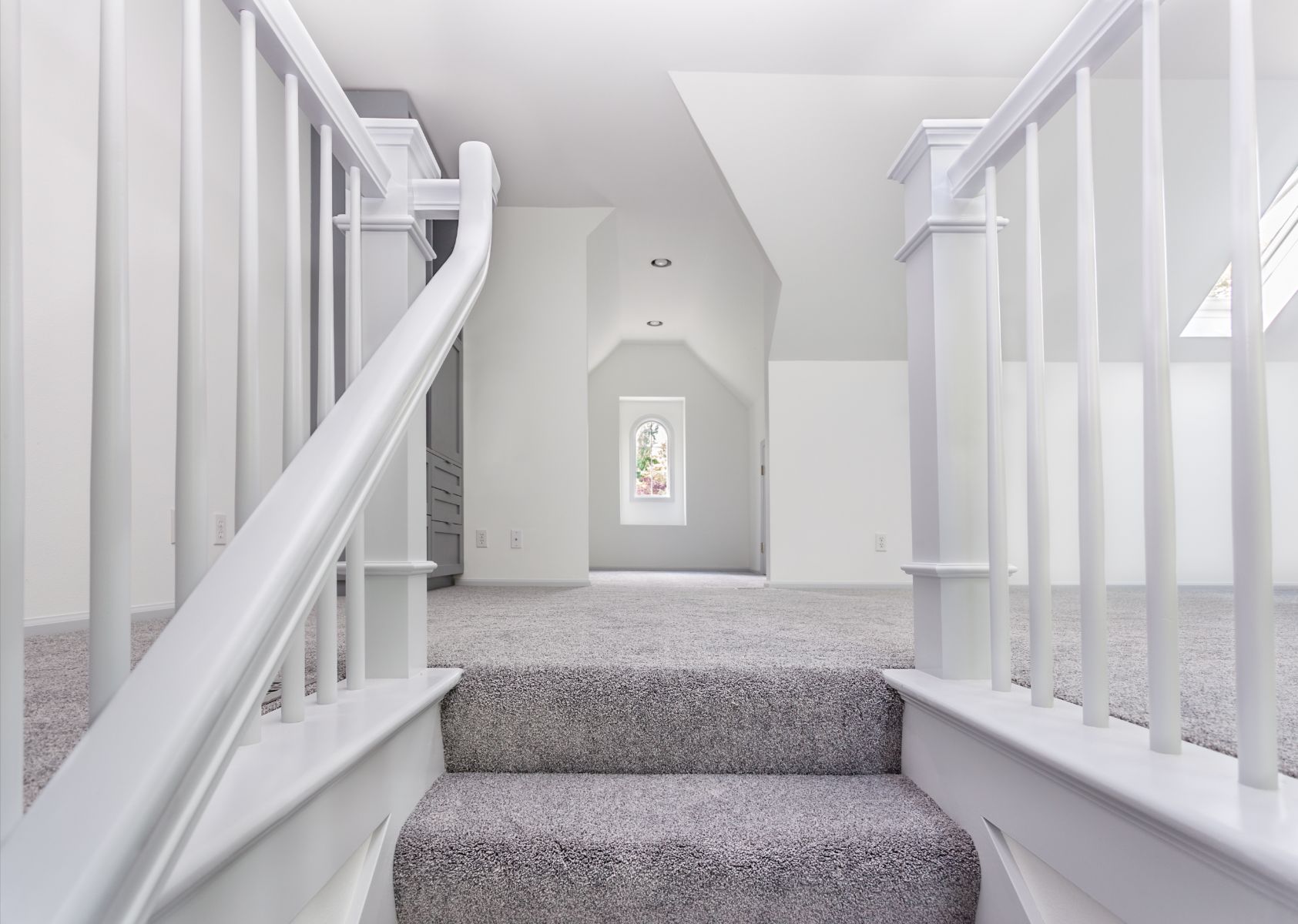
Stairs experience more daily wear than almost any other surface in your home. They handle constant foot traffic, sharp turns, and repeated impact from shoes, pets, and movement between levels. Because of this, the carpet you choose for your stairs cannot simply look attractive. It must also be strong, stable, and able to maintain its appearance over time.
Choosing the right stair carpet affects comfort, safety, and long-term durability. At CW Floors & Lighting, we help homeowners make confident decisions every day through free in-home consultations, product samples, and expert guidance. Our goal is to help you select carpet that performs well and enhances the look of your home.
Let’s walk through how to choose the best carpet for stairs.
Why does stair carpet need special consideration?
Carpet performs differently on stairs than it does in open rooms. Flat floors experience even pressure, but stair treads and risers create angles, tension points, and concentrated wear. This means the carpet must be strong enough to handle repeated impact in the same locations.
Stair carpet must handle:
Heavy concentrated foot traffic in the center of each step
Constant bending and stretching around edges
Increased wear from friction and impact
Higher safety demands to prevent slipping
Because of these conditions, the best stair carpet is usually:
Dense and tightly constructed
Durable and resilient
Low to medium pile height
Professionally installed for proper tension and fit
Choosing the wrong carpet can lead to premature wear, loosening along the edges, or even safety concerns. Choosing the right carpet improves comfort, enhances traction, and extends the life of your flooring investment.
What carpet material works best for stairs?
Carpet fiber plays a major role in how well your stair carpet performs over time. Some materials recover from compression better than others, and some resist wear more effectively.
Here are the most common carpet materials used on stairs.
Nylon
Nylon is one of the most popular choices for stair carpeting because it is extremely durable and resilient. It holds its shape well and recovers quickly from heavy use. This makes it an excellent option for busy households.
Nylon carpet is best for:
Busy households
Homes with pets
Long-term durability
Polyester
Polyester carpet is known for its softness and vibrant color options. It is typically more affordable than nylon carpet, though slightly less resilient. Polyester can perform well on stairs when traffic levels are moderate.
Best for:
Budget-friendly upgrades
Decorative stair runners
Lower traffic homes
Wool
Wool is a natural fiber that offers a luxurious feel and excellent durability when properly maintained. It holds texture well and provides natural insulation. However, wool carpet is generally considered a premium option.
Best for:
High-end design
Natural fiber preference
Long-term value
If you are unsure which material is right for your home, our experienced consultants can help you compare performance, comfort, and value.
What carpet pile is best for stairs?
Carpet pile refers to how the fibers are cut or looped. This affects how the carpet looks, feels, and wears over time.
For staircases, a lower and tighter pile typically performs best.
Low pile carpet: Low pile carpet is dense and firm, which helps it resist crushing and maintain its structure. It also provides a stable footing and is easier to clean. For these reasons, low pile carpet is often the top recommendation for stair installations.
Berber and loop carpet: Looped styles such as Berber carpet are highly durable and resistant to flattening. They can perform very well on stairs when installed properly. However, they must be selected carefully in homes with pets, since loops may snag.
Plush and high pile carpet: High pile and plush carpets offer softness and comfort, but they tend to flatten quickly under heavy stair traffic. They may also reduce stability when walking on steps. These styles are usually better suited for lower traffic areas.
When comparing carpet samples, try gently bending the material. Dense carpet resists folding and springs back quickly. That resilience is a strong indicator of performance on stairs.
How important is carpet density and thickness?
Carpet density is one of the most important factors to consider for stair use. Density describes how closely packed the fibers are within the carpet structure.
Higher density provides:
Better durability
Less visible wear
Stronger structure
Longer lifespan
Thickness is also important, but thicker is not always better. Carpet that is extremely thick can be more difficult to secure tightly on stairs. The best option is typically a carpet that combines moderate thickness with high density.
During a free in-home consultation, we can measure your stairs and help you compare carpet samples in your own lighting conditions. Seeing the materials in your space allows you to evaluate both performance and appearance more accurately.
Which carpet style looks best on stairs?
Your staircase is a visible architectural feature that contributes to your home’s overall design. The stair carpet you choose can enhance that visual impact.
Consider these design approaches.
Patterned carpet: Patterned carpet can help disguise wear patterns and traffic marks. It also adds visual interest and personality to the staircase.
Neutral tones: Neutral colors create a timeless appearance and coordinate easily with surrounding flooring and décor.
Darker shades: Darker tones help conceal dirt and footprints, which can be especially helpful in busy households.
Stair runners: Runners provide traction while allowing the edges of hardwood steps to remain visible. They add elegance and create a balanced visual contrast.
Our spacious carpet stores are designed to help you compare colors, textures, and styles comfortably. You can view multiple samples side by side and select the option that best fits your design goals.
Should you prioritize safety when choosing stair carpet?
Safety should always be a primary consideration when selecting carpet for stairs. Carpet naturally improves traction and provides cushioning, but only when the correct type is selected and installed properly.
For best safety:
Choose dense carpet with good grip
Avoid overly thick padding
Ensure professional installation
Select secure stair edging
At CW Floors & Lighting, we stand behind every installation we complete. We offer strong warranties because we believe your flooring should provide both style and peace of mind.
Why does professional installation matter for stair carpet?
Installing carpet on stairs requires precision and experience. Each step must be measured accurately, stretched properly, and secured tightly.
Professional carpet installation ensures:
Tight, wrinkle-free fit
Proper edge wrapping
Consistent appearance
Long-term durability
Improper installation can cause loose carpet, uneven wear, or visible gaps. That is why we work with skilled installers and represent leading manufacturers. Our goal is to deliver results that last.
Contact our carpet store in San Antonio or Rockwall, TX
Selecting the best carpet for stairs means balancing durability, safety, and design. The right material, density, and construction will protect your investment and enhance your home for years to come.
If you are ready to explore your options, visit CW Floors & Lighting or schedule a free in-home consultation. We will help you compare samples, evaluate performance, and choose the perfect stair carpet with confidence. From our carpet stores in San Antonio and Rockwall, TX, we proudly serve San Antonio, Denton, Rockwall, Dallas, and Fort Worth, TX.